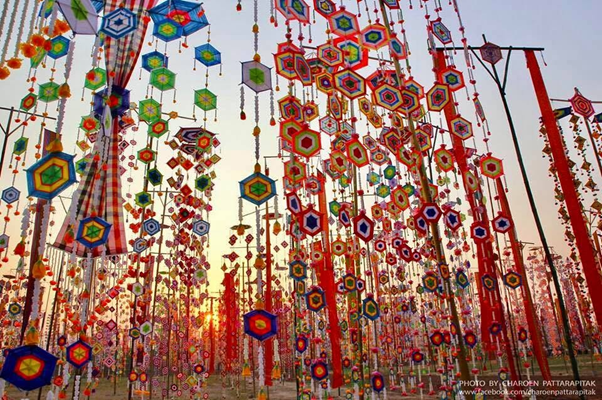

Loy Krathong, The Hidden Spirit of Thais
There is a belief about adding nails, hair and coins in the Krathong as a symbol of letting go of…


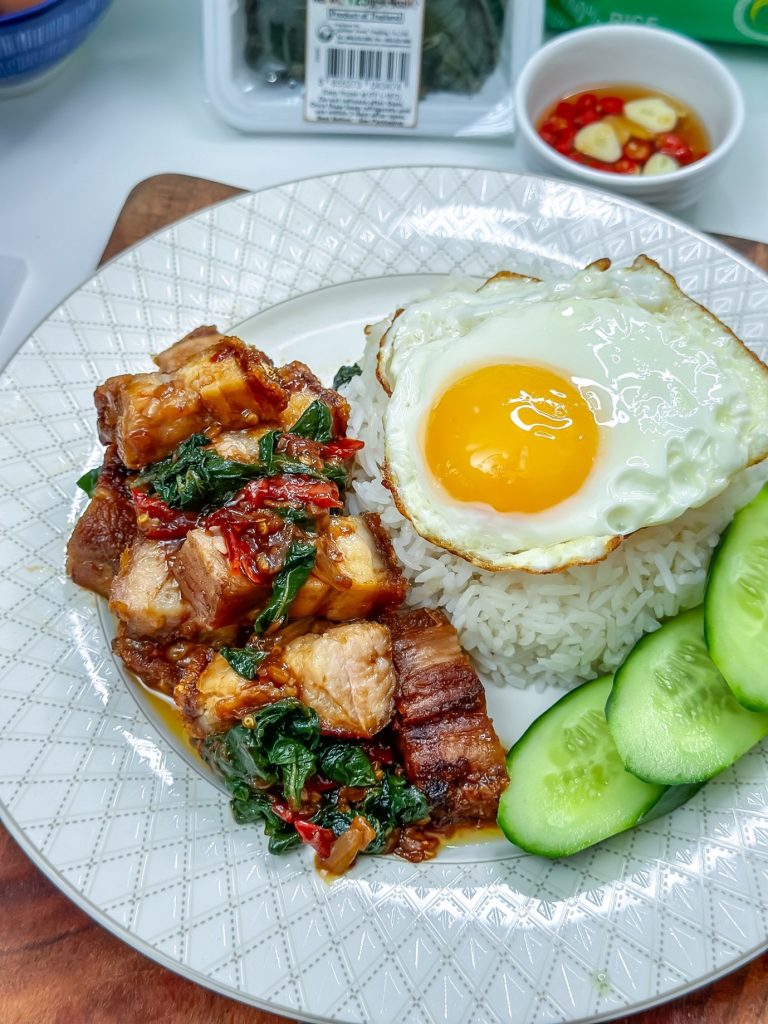
I went to an art fair in the city centre recently and stumbled upon some lovely postcards made by a Thai illustrator. The set of 4 postcards contained images of Thai culture, most of them images that we see everywhere to promote Thailand – Muay Thai, tuk-tuks and popular Thai dishes like Pad Kra Pao. The last one was of a lady sitting in a pub peab position (sitting on the floor with legs folded to one side) behind a khim, a traditional Thai instrument. I thought to myself, I bet if you ask a random non-Thai person to name a few Thai dishes they would be able to, but not if you ask them to name a single Thai instrument (to be fair, I don’t know the names of most of them either). On that note, let’s explore the traditional sounds of Thailand!
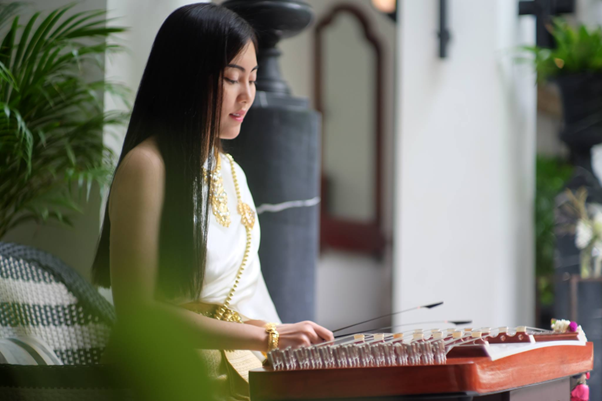
Playing khim, a traditional Thai instrument (Image Source | bulandanmekmusic)
Like the food, clothes and dialects in Thailand, the music and instruments from each region has its own flairs and flavours. Influences that travel from afar as well as the cultures of ethnic groups and bordering countries mix and blend to become what is it today. It is said that traditional Thai instruments have a long history, many originating from the Sukhothai era in the 13th century. In Part 1 of this series we’ll explore the classical instruments, ones played in ensembles at royal events and ones that accompany dances and plays.

A variety of traditional Thai instruments from different regions (Image source | Sukhothai)
There are three main groups of classical Thai ensembles, each differ in the make up of plucking, bowing, striking and blowing instruments or deed, si, dtee and pao respectively.
Wong Piphat (wong translates to band) has percussion and wind instruments at its core, often featured in ceremonies and Khon performances. The arrangements differ from era to era and many sub-variations exist. However to spot a Piphat band you can look for the following instruments.

A variation of Wong Piphat with Ranat at the front (Image source | Thai Music Division)
Ranat Ek
The leading instrument, a Thai xylophone with 21-22 bars suspended over a boat-shaped body. Usually made from well-seasoned hardwood such as rosewood and played with 2 hitting mallets. Other types of Ranat also exist, made with different materials to create different pitch and tone. The movie Hom Rong – The Overture (2004) has an epic Ranat Ek battle scene!
Khong Wong Yai
Another percussion instrument in the ensemble with 16 small gongs made from metal alloy tied to a semicircle rattan frame with cord. The player sits inside and uses 2 short beaters to produce the principal melody. A smaller version called Kong Wong Lek has 18 gongs but is built in the same way.

(Image source | Rapeethai)
Pi Nai
The same Pi in Piphat, this is the only wind instrument in the ensemble and is made from smooth rosewood. The cylindrical body contains 6 holes and produces quite a piercing sound that usually embellishes the principal melody.
Tapone
A barrel shaped drum that lays on a stand with dual heads, one bigger than the other. Played with both hands and fingers to produce eleven varieties of sound-effects. The shell of the drum is made from teakwood and the ends with animal skin.
Wong Khruang Sai features mainly string instruments (sai means strings), wind instruments and some wooden percussion accompaniments.Often played in indoor settings at events such as weddings and housewarming ceremonies due to its quieter nature . The three main string instruments in Wong Khruang Sai are as follows.

Saw Duang (left), Chake (middle), Saw Ou (right) (Image source | Tom Thai Music)
Saw Duang
Another instrument made from hardwood, features 2 silk strings and played with a bow made from horsetail hair. Unlike the violin, the bow contacts behind the string and the instrument is played upright whilst resting on the player’s lap. The bright sound produced by Saw Duang makes it the lead in the ensemble.
Saw Ou
Similar to the Saw Duang with 2 silk strings however the soundbox at the bottom is made from coconut shell. It is also played upright but has a much deeper sound.
Chake
A name which also means crocodile, this floor zither used to resemble the shape of a laying crocodile with a head and tail. The instrument has 3 strings and 11 frets and is played by pressing on the frets with the left hand and plucking the strings with a tool tied to the player’s right index finger.
Wong Mahori blends the instruments in Wong Piphat and Wong Khruang Sai and is traditionally only played in royal settings for ceremonies and entertainment. Different sizes of the ensemble exist with different combinations of string, wind and percussion instruments.

(Image source | The Fine Arts Department)
Saw Sam Sai
The name translates to three-stringed saw which differentiates it from the other saw instruments with only two strings. It is a more prestigious instrument that was traditionally only used in the royal court with a body made from a special type of coconut shell (a shape with 3 convex bumps). Apart from the three strings, the bow is also independent to the body of the instrument instead of being attached behind the strings.
Krachappi
A large wooden long-necked lute with 2 sets of 2 strings and high frets played by strumming and plucking the strings. The instrument features in smaller and older styled ensembles such as Mahori Boran which only has 4 to 8 instruments.

(Image source | Thai Culture To The World)
Did you know?
If you watch the Youtube videos above you will notice that none of the musicians are looking at sheet music. Traditionally Thai music had no written instructions and musicians trained by the knowledge passed down by their teachers. It wasn’t until 1929 that a prince asked Phra Chen Duriyanga to help devise a system to record traditional Thai music using Western notations as he feared the knowledge would go extinct with the death of great Thai music masters.
Article By Oun V.
References
Thai Culture, New Series No. 15 – Thai Music | Thaicyclopedia | Thailand Foundation (Traditional Music) | Thailand Foundation (Classical Orchestra)