Japanese Lucky Cats are widely seen and known, usually sitting with their arms waving back and forth near the cash register of a shop or restaurant – beckoning for good luck to be brought to their owner. You may or may not have noticed, but many Thai shops and restaurants have their own version of the Lucky Cat. A little statue or picture of a lady with her right hand up sitting on the counter or a shelf, often surrounded by offerings of drinks and flowers. In Thai we call her Nang Kwak, a goddess that promises to call in good business, prosperity and fortune.
The word Nang is a prefix to a woman’s name, similar to Lady or Miss, and Kwak means to call or beckon. Quite a literal name for Nang Kwak who is usually represented as a lady who is motioning for people to come over! Her statues are often of a beautiful female wearing a traditional Thai dress with a sabai (the fabric that covers one shoulder) and adorned by elegant jewellery and headdress. Sitting in a pub peab position (polite way to sit with both feet pointing behind in one direction), her left hand is either resting or holding a bag of gold and her right hand raised up in the beckoning position. In Thailand you’ll spot her everywhere, from small street food carts to well established bars and even dedicated shrines and on amulets.
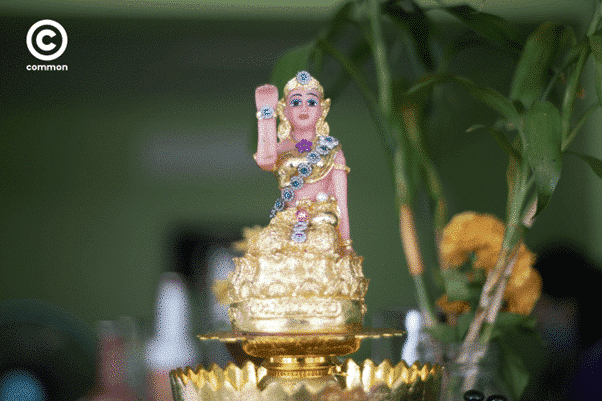
A modern statue of Nang Kwak (Image source | Supakit, becommon)
Nang Kwak is well known and loved by Thai businesses, but how did she become the symbol for attracting customers and profit? There seems to be multiple versions of her tale and different groups of people have different beliefs regarding her origins. Some believe that it all started about 2500 years ago in India during the time that Buddhism was emerging. There was a woman called Nang Supawadee, daughter to modest Brahmin merchants who travelled around and traded goods to support the family. By a stroke of luck, they met Phra Kassapa, one of Buddha’s enlightened disciples at a town they were visiting. Deeply moved by his teachings, Nang Supawadee decided to become a follower of the faith, devoting herself to the path of Buddhism.
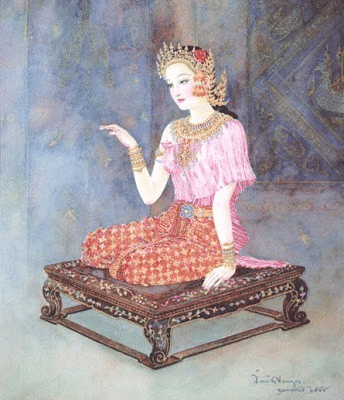
A painting of Nang Kwak (Image source | MThai Dhamma)
Later whilst visiting another town, due to Nang Supawadee’s manifestation and sheer luck the family also met Phra Sivali, a revered enlightened disciple of Buddha. With the knowledge and blessings from both disciples she met, her good merit and ability to spread loving-kindness (metta) grew. Whenever Nang Supawadee accompanied her parents, they noticed their business would do incredibly well, putting it down to the presence of her blessings and generosity.
The family eventually became incredibly successful and wherever Nang Supawadee went, people cherished and loved her. Once she passed, people believed that her spirit remained and continued to spread loving-kindness and assist others. Images of her were produced as people started to make offerings and pray to her hoping for blessings and assistance with their businesses. Eventually Brahmin merchants made their way to Thailand, carrying statues of Nang Supawadee with them which quickly became adopted by Thai merchants believing that she would also bring them good fortune.
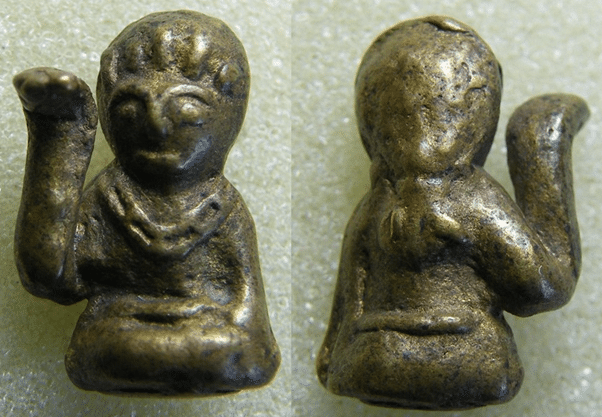
A metal alloy cast of an old Nang Kwak image (Image source | Meeteekit)
For another group of people, there exists a mantra for worshipping Nang Kwak that translates to,
“… Oh Phu Jao Kao Keaw, has one daughter named Mae Nang Kwak. Any male who sees her loves her, any female sees her loves her. Every district knows her and loves her. Oh the merchants take me to trade, selling rings, receiving hundreds of thousands. Anything for sale, the profits are easy, piles of silver and baskets full of gold …”.
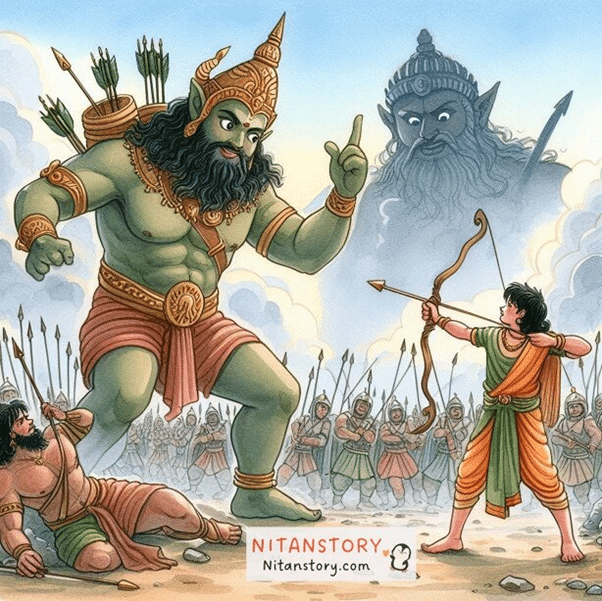
The battle between the giant and Rama (Image source | Nitanstory)
The folklore describes Nang Kwak as the daughter of a powerful spirit, the guardian of mountains and forests Phu Jao Kao Keaw. Once, a malevolent giant who is a friend of Phu Jao Kao Keaw was cursed by Rama who put an arrow in his chest, banishing him to the top of a mountain. He stated that the curse will be lifted when the giant’s daughter finishes weaving a robe made by the fibres of the lotus plant and offers this to the future Buddha. As she stayed on the top of the mountain to look after her father and to weave the robe, her living conditions became incredibly poor.
Seeing this, Phu Jao Kao Keaw felt sorry for her and told his daughter Nang Kwak to keep her company. With Nang Kwak’s compassion and accumulated good merit, merchants and people started to feel pity. With their metta, they began to donate their riches and goods to the giant’s daughter to alleviate her suffering, changing her life to one of prosperity and good fortune. Once Nang Kwak passed, people in the village created a statue to worship her as a symbol of loving-kindness and for blessings of good fortune and prosperity.
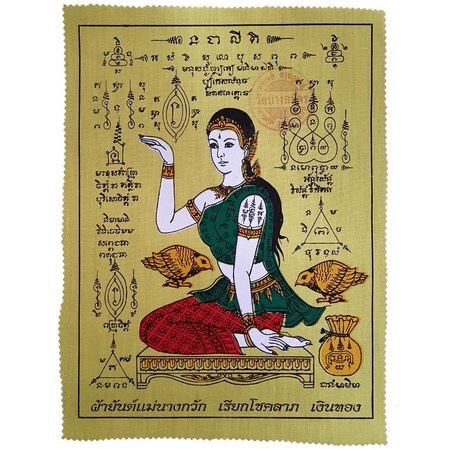
A Nang Kwak amulet for good luck and good fortune (Image source | E shann)
Over time as the society and economy in Thailand became more focused on trades and commerce, the image of Nang Kwak gained popularity around the country. People leave their wishes of a successful business with her, hoping their daily offerings of flowers and drinks will bless them with good fortune.
References
Silpa Mag | Youtube (Point Of View) | Thailand Amulet | Thairath Culture | Singhanakorn