

Chinese New Year Food: What to eat?
manchestereveningnews.co.uk Although there are a multitude of traditions that are part of Chinese New Year, enjoying a special meal with…


There’s a new restaurant in our neighbourhood that has become part of our lunch rotation called ‘Ruam Sen – Noodles Everyday’. The menu consists of only noodles, soupy and stir-fried and has 5 different noodle types for you to choose from. For locals in Thailand we are familiar with the question ‘sen arai?’ or ‘what type of noodles?’, most of us will actually already include our choice with our order. However I’ve come to realise that for those who are less familiar with the noodle culture in Thailand, this question can be quite overwhelming, what noodles are there and what are they called?! In this blog, let’s stretch our knowledge of noodles and dig into some of the more common types of sen you may come across in Thai food.
Note : For a short history of Thai noodles please visit our previous blog here.
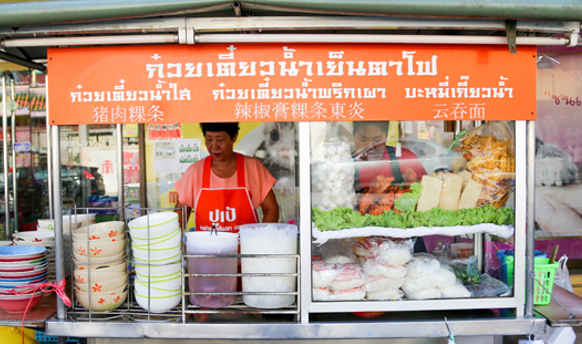
A typical noodle (guay tiew) store will have available noodles on display in their glass cabinet! (Image source | Hatyai Focus)
Noodles in soups and stir-fries
Sen yai
Sen yai or what translates to ‘big noodles’ are the widest type of rice noodles. They are often called flat rice noodles or wide rice noodles. Traditionally, they are made from a mixture of rice flour and water which are steamed into big sheets. They are sold fresh, lathered in oil to prevent the pieces from sticking to each other and can be cut to around 1.5-2cm wide for noodle soup dishes and 2.5-3cm for stir-fried dishes. The texture is soft with a slight bounciness and is the perfect vessel for absorbing flavours! Sen yai is often seen in dishes such as pad see ew, pad kee mao, rad naa (gravy noodles) and yen ta fo (pink noodle soup).
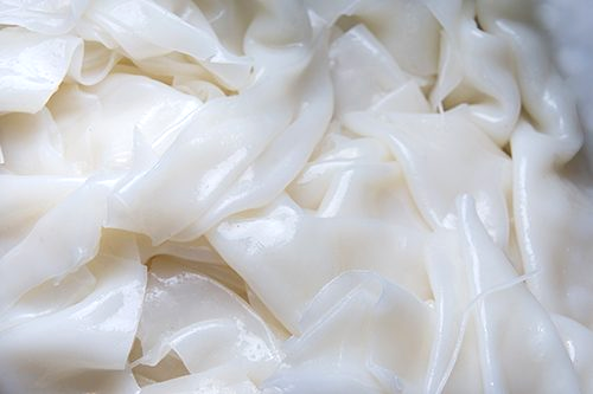
Sen yai (Image source | The Asian Parent)
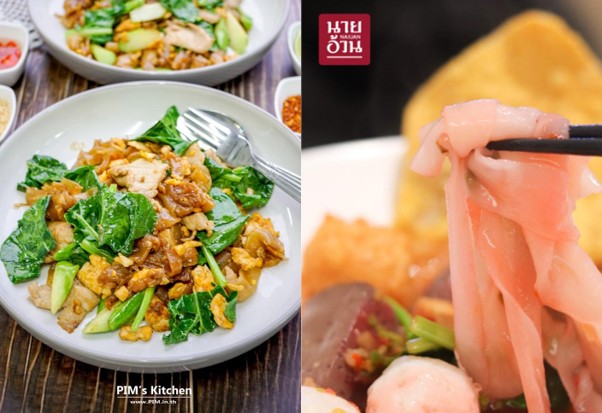
Sen yai used in pad see ew (left) and yen ta fo (right) (Image source | Pim’s Kitchen, Naiuan Yentafo)
Sen lek
Just like sen yai, sen lek is also a rice noodle made from rice flour and water, but thinner! The name means ‘small noodles’ and provides the perfect chewy bite. Unlike its wider counterpart, these noodles are often sold dehydrated and require pre-soaking. The most notable kind of sen lek is sen chan, the Chantaburi rice stick that is often used in pad thai sen chan. These noodles are so versatile and are seen in all types of dishes, from typical noodle soups like boat noodles, stir-fries like pad thai to spicy salad like tum sen lek (the noodles soak up all the spicy sauce, delicious!)
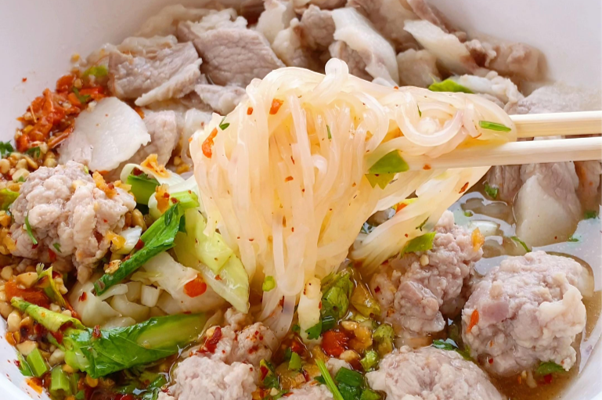
Sen lek tom yum noodle soup (Image source | Noy At Home)
Sen mee
The angel hair pasta of rice noodles, the strands of sen mee goes even finer than sen lek. Although also made from a mixture of rice flour and water, the texture feels completely different. It feels lighter and more delicate and doesn’t have the same chewy bouncy feel the other two does. In recent years, the popularity of the menu mee kai cheek or shredded chicken dry noodles has put sen mee in the spotlight. Other menus you can find sen mee in are pad mee chompoo (stir-fried pink noodles), pad mee sai kai (stir-fried noodles with eggs) and as an option at most regular guay tiew shops. This type of noodle can also be deep fried and turned into mee krob, enjoyed as a snack when flavoured or as a crunchy topping for other dishes.
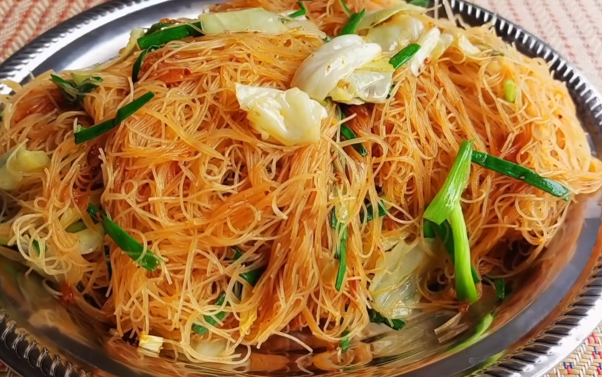
Stir-fried sen mee (Image source | Country Kitchen)
Ba mee and mama
Ba mee, the classic egg noodles made from flour and eggs, my personal pick! The strands of noodles are rounder when compared to the rice noodles and the slight waviness of it picks up sauces and soups well. It has a more savoury eggy taste and a less bouncy bite . Popular dishes with ba mee are those with a strong Chinese influence such as ba mee geaw (wonton noodles), ba mee moo daeng/moo grob (BBQ pork/crispy pork noodles) and ba mee klook (saucy mixed noodles). Mama noodles are the wavy and crunchy instant noodles we are all familiar with, named after the most popular instant noodle brand in Thailand. Due to its affordable cost and long shelf life, mama noodles are available in most noodle and cook-to-order shops in menus such as mama pad kee mao, yum mama (spicy instant noodle salad) or pad mama.
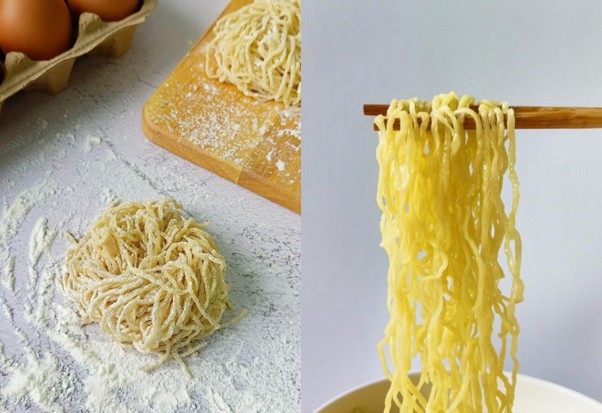
Raw and cooked ba mee (Image source | Good Food)
Other noodles
Kanom jeen
A round rice noodle that is often made from fermenting rice for 2-3 days (although non fermented versions also exist). This fermentation gives the noodles a soft and slightly sticky texture and more umami taste and smell. The production process involves extruding the noodle dough mixture into hot water to create strands, once cooked they are cooled and arranged. At markets, you will usually see coils of kanom jeen being sold fresh in little colourful baskets. Kanom jeen is often eaten with curries and a variety of fresh vegetables, the most common being kanom jeen namya, or fish curry. However they also make a fantastic addition to spicy salads such as tum sua (papaya salad with fermented fish).
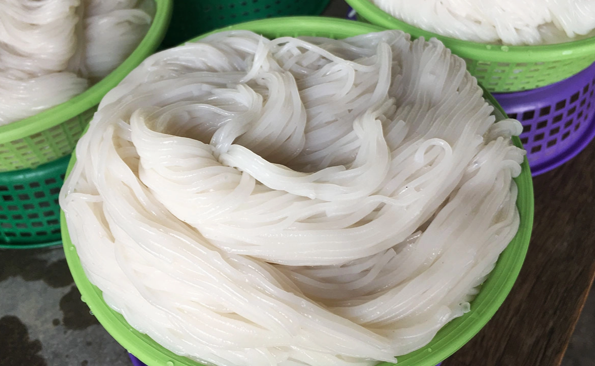
Fresh kanom jeen (Image source | Thairath)
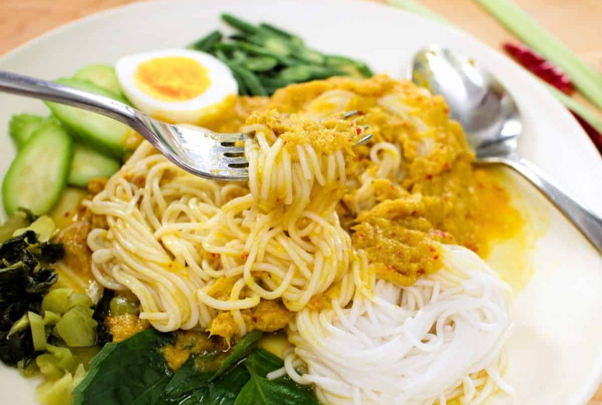
Kanom jeen with curry (Image source | Hot Thai Kitchen)
Woon sen
Unlike all the other noodles, woon sen or glass noodles are made from mung bean starch. The strands are thin and round and turn clear once cooked. The word woon in Thai means jelly, which describes the texture and appearance of this noodle pretty well – it feels soft, stretchy and bouncy. By itself there is no distinct flavour, however it acts as the perfect vessel for soaking up and holding onto sauces and seasonings. Common woon sen menus include goong ob woon sen (baked shrimp with glass noodles), gaeng jued woon sen (glass noodle soup), yum woon sen (spicy glass noodle salad) and pad woon sen.
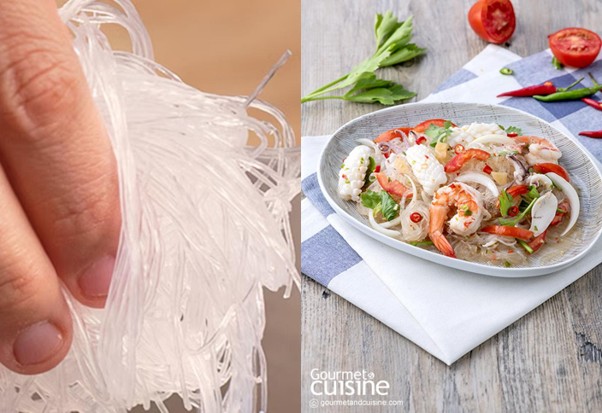
Soaked woon sen (left), yum woon sen (right) (Image source | Knorr, Gourmet and Cuisine)
References
Aroi Fin | Na Nong Tum


