
What is Oleang? | Thai Iced Coffee | โอเลี้ยง
sunnysidecircus.com Oleang has the unique aroma, a combination of a coffee aroma and the special roast and smoky notes from…


Have you ever wanted to feast like cavemen, gnawing on a giant mound of meaty bones? Well, in Thailand you can! Quite a number of years ago when visiting night markets in Bangkok, I started seeing a new trend. People with gloves on, sweating from head to toe, with a giant mountain of bones covered in chillies right in front of them. Each person with a piece in hand, digging through the nooks and crannies of the bones to get to the meaty bits, only pausing to wipe their dripping foreheads. Spoons came in to help with the broth at the bottom of the tray and to scoop out larger chunks of meat and rice.
It’s no surprise that something with such an extravagant presentation became viral, it became the content creator’s dream to document themselves trying the dish. Fast forward nearly a decade and you’d think the dish has been long forgotten like many other food trends. However leng saeb stood the test of time, still available and in even more places (in much more reasonable forms). Perhaps the popularity was not only due to its flashy looks, but due to its delicious and addictive taste as well!

I wasn’t lying, it’s a literal mountain! (Image source | klook)
Leng saeb, also often called leng tom saeb is inherently a simple dish, pork bones with a spicy, sour-forward and herbaceous broth. The ingredients are few but the flavour packs a punch! The origin of the dish is a little bit of a mystery, but the name offers some clues. The word ea leng in Teochew Chinese means pork spine (note: Teochew are people who immigrated from the Chaozhou-Shantou Region in China to Thailand since the 18th Century) and saeb is a Thai Isaan word meaning delicious, often describing something enjoyably spicy. From the name, it seems like the dish is an offspring of a marriage between the Thai and Chinese side.
The leng cut was an undesirable and therefore affordable cut which was often used by kuay teow (noodle soup) shops – this is the Chinese influence. It was more of a byproduct and was thought to not have enough meat on the bones to star in a dish of its own. However boiling them for hours extracts the rich, umami and sweet flavours that are hidden within the meat, bone marrow and cartilage. At the end of the day, there is often an excess of these bones, hence why customers can usually request some for free to snack on with their meals (I used to call dibs on these when someone was making broth at home!). It was said that staff would enjoy these leftovers after closing and I could imagine someone at some point exclaimed, “this needs some spice!”, and off they went to use available ingredients to whip up a rough seafood sauce to make it more saeb. Then the rest is history.
Pork bones requested at a kuay teow shop (Image source | FullZub Ornnutcha)
If you are not in Thailand and cannot easily get your hands on leng saeb, fret not! This dish is quite simple to make. Pork spine may be difficult to source so other bony but meaty parts like neck bones or even ribs can be used instead. Cover with water and simmer these with smashed coriander root, garlic, peppercorns and salt for about 1.5-2 hrs or until the meat is tender and starting to fall off the bones. Skim off any scum that forms on top of the broth to keep it nice and clear. To make the spicy broth, add a little bit of fish sauce, roughly smashed or chopped green chillies and garlic and a lot of lime juice – adjust each element to your liking but keep in mind the dish is supposed to be quite spicy and sour. After turning the heat off, top with chopped coriander and saw tooth coriander. Dish up and enjoy with some warm rice.
From its humble beginnings, leng saeb has now become a popular dish consumed not only at night markets. The dish can now be found in many different types of restaurants, from tom yum noodle places, to ‘order as you want’ joints, Isaan and Thai restaurants. Some night markets still serve them as mountains for groups of people to enjoy, but more commonly they now come in more reasonable sized bowls for everyday occasion.
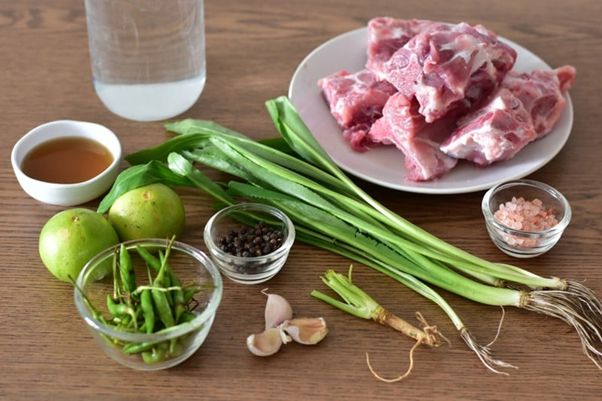
Simple ingredients that go into making leng saeb (Image source | Poondang)
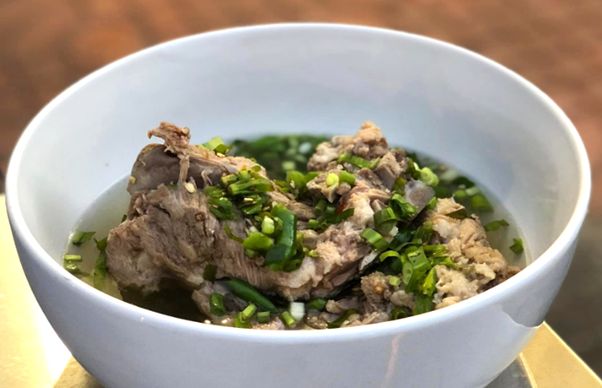
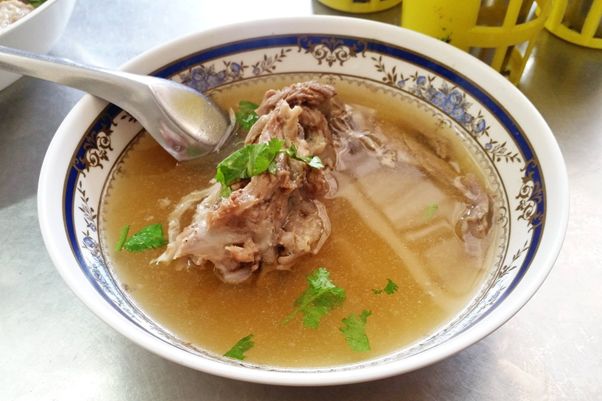
A bowl of leng saeb (Image source | Meng Leng Saeb)
References