
New Crop Jasmine Rice
The Lion Brand Jasmine New Crop 2018 Rice has arrived and ready for sale! But what’s the fuss about? What…


As someone who grew up in the 90s, I’m noticing a lot of us millennials are now being bit by the nostalgia bug. My husband is playing a game from 2 decades ago, my friend just bought a tamagotchi and I have been rewatching movies from the 2000s. Since moving back to Thailand, I have had the chance to revisit a lot of fond memories I had here from that era. One of my favourites are the street carts in front of my brothers’ high school. I would get picked up from my school, nap in the car and wake up to tantalising smells in the air. Whilst waiting for my brothers to come through the school gate, I’d pick up some snacks to share with them. Our usual were moo ping, skewered meatballs or look chin ping, kanom kai nok kra ta, kanom tokyo, frozen ice pops and an assortment of sweets.
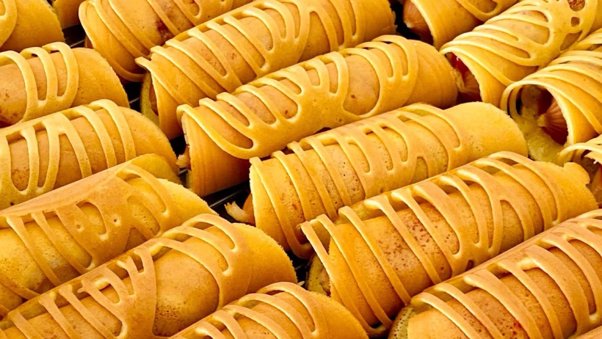
A row of delicious kanom tokyo (Image source | Tokyoro Sweet)
My kanom tokyo order – 2 quail egg and minced pork, 1 custard, with a special request of “make it crispy please!”. I’d watch as the vendor swiftly spoons batter onto the hot flat plate, then circles it with the back of a spoon into a long ellipse and adds the iconic swirly ‘strings’ at the top. Skillfully cracking quail eggs, adding fillings, sauces and seasonings and finally rolling them up into sausage-shaped morsels. Reaching into the slightly homemade paper bag (they always came in these bags made with recycled paper) always brought me so much joy – the crunchy pancake-like exterior combined with the soft and flavourful fillings was the perfect after school snack.
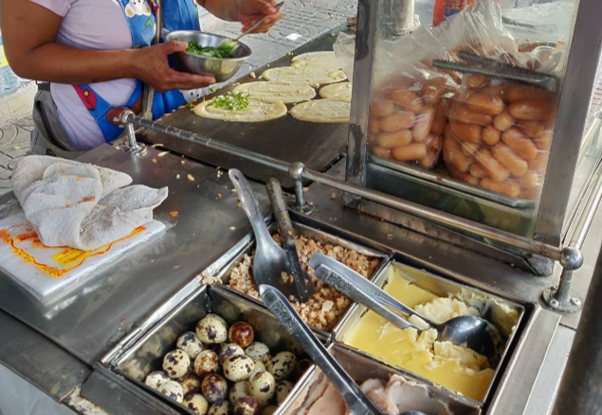
What a typical kanom tokyo cart looked like (Image source | Anya)
Just like ‘American fried rice’ in Thailand has very little to do with America, I also came to learn that kanom tokyo doesn’t even exist in Tokyo, at least not in the way Thai people know them. So how did this Thai childhood snack of mine end up with the capital city of Japan as its name? I dug around but couldn’t find any official records on this matter, but many publications seem to think that it all started in the 60s when the Japanese department store Daimaru first opened its door in Bangkok. Ironically, Daimaru originated in Kyoto and not Tokyo. People recounted visiting to sample novelty international foods and snacks, and perhaps kanom tokyo was inspired by one of those.
Many say it was the dorayaki, a popular Japanese snack that consists of two small pancakes and red bean paste sandwiched in between that birthed kanom tokyo. Apart from the fact that they are both cooked on a hot flat plate and have a pancake-y batter, I couldn’t see the connection. However as I continued my research, I stumbled upon this dorayaki maker who also made anmaki, a snack made from the same batter but spread thinly into an ellipse and rolled up instead. Another plausible inspiration is the komokaburi, a traditional snack from Kanazawa, the cooking technique with the ‘bunny ears’ seem to be the most similar to kanom tokyo.
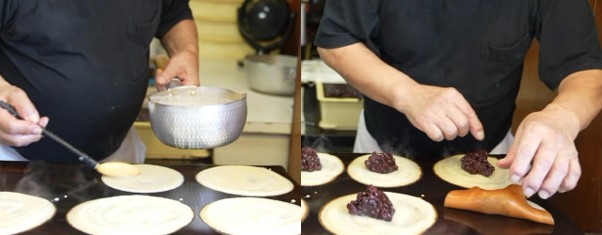
The dorayaki store making anmaki (Image source | TRAVEL CINEMA)
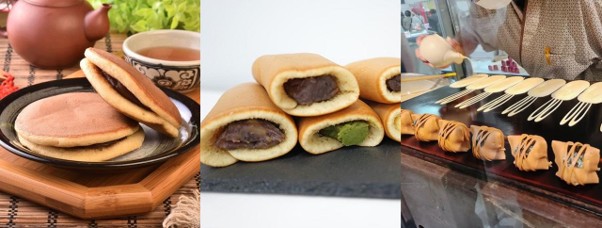
From left to right – dorayaki, anmaki and kookaburra (Image source | Hatena Blog, Nissho Apn, Utsunomiya)
My personal theory: Perhaps one of those Japanese snacks at Daimaru were becoming popular with Thai people, however I can imagine that food from an international department store could be quite costly. With the street food scene booming in Bangkok around the same time, someone probably saw the opportunity to bring the snack to the masses – adapting it to be more affordable, quicker to make and more suited to the local taste. The name, kanom means snack and Tokyo, a way to relate back to Japanese department store, or maybe because the word kyo in Thai also means twist which describes the rolling of the snack. What is your theory?
Back when I was buying kanom tokyo in front of my brothers’ school, there were only a few sweet and savoury fillings. Custard and pandan for the sweet, and a combination of quail eggs, seasoned minced pork and hotdog for the savoury. Nowadays I can get them in different sizes, standard or even jumbo. The fillings, anything you can think of from cheese, ham and pork floss to choc-chip, Nutella and peanut butter (my current favourite is peanut butter with slivered almonds!). No matter how kanom tokyo will keep evolving over time, the snack will always bring back core memories for me. I do miss when they were around 5 baht each though!
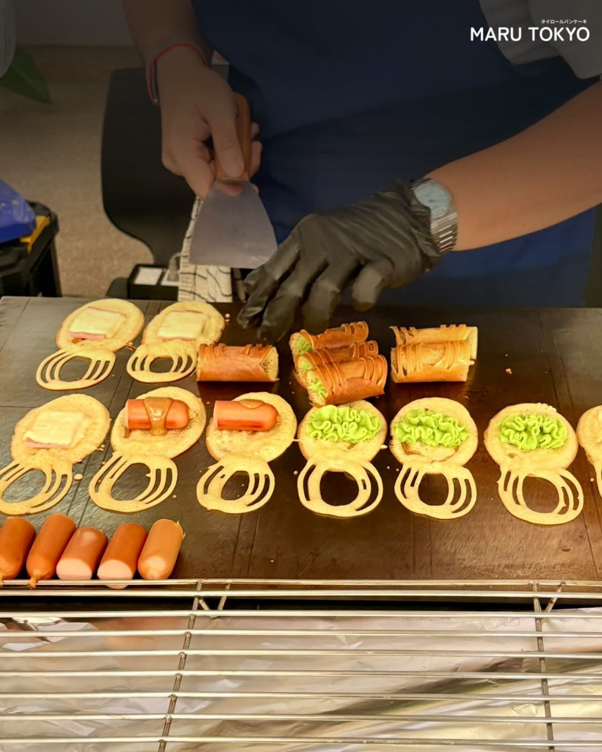
A modern kanom tokyo store with a variety of sweet and savoury fillings to choose from! (Image source | MARU TOKYO)
If you want to try making kanom tokyo at home, try this batter recipe from ThaiChef Food:
References
The People | Travel Cinema (Youtube)